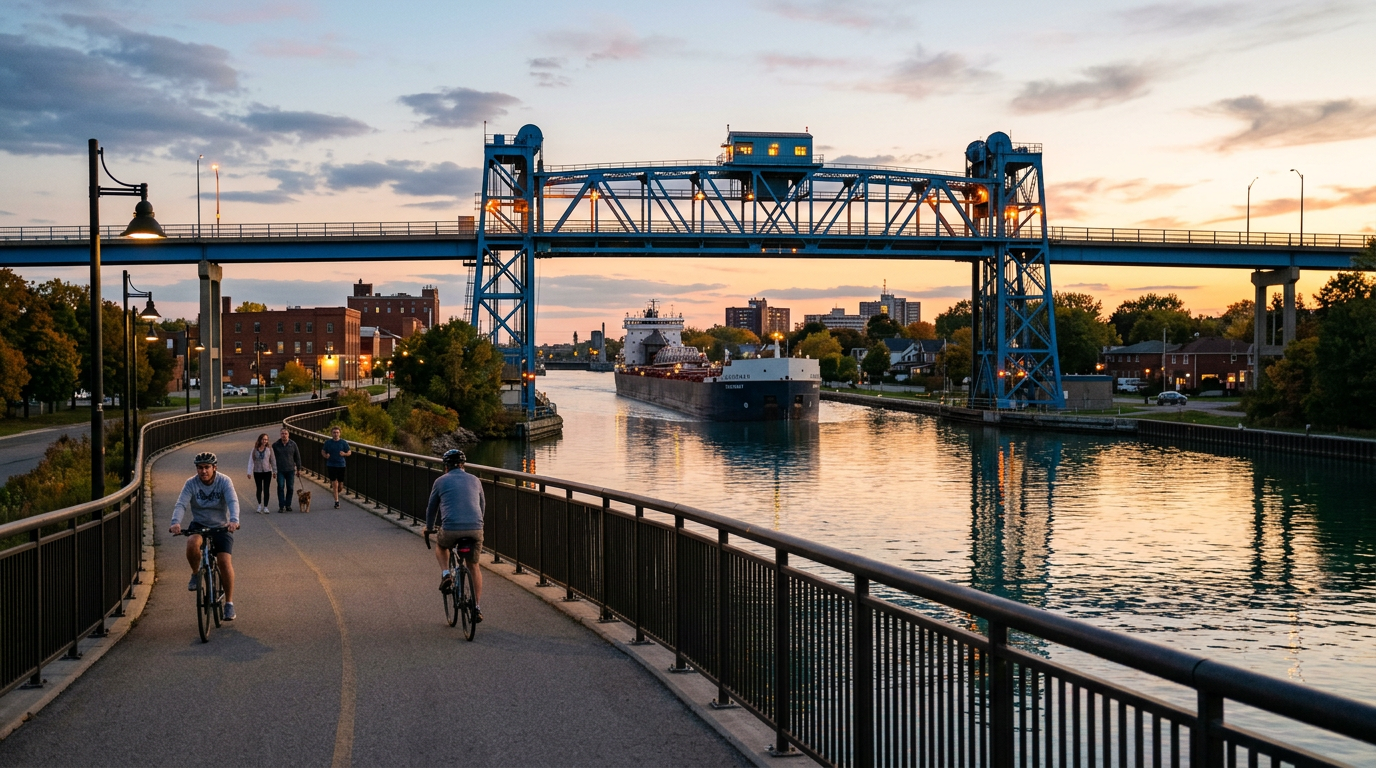
The Welland Canal by Boat — Your Ultimate Guide to a Unique Ontario Adventure
Hey there, fellow boaters! TJ here, from Port Colborne. You know, I've spent more hours on the water than I can count, and I've learned a thing or two – sometimes the hard way, so you don't have to. Today, we're talking about one of the most incredible, and frankly, intimidating, boating experiences you can have in Ontario: transiting the Welland Canal. It's not just a waterway; it's a piece of Canadian history, an engineering marvel, and a gateway between two of our Great Lakes. But it's also a serious piece of infrastructure, designed for massive commercial vessels. Taking your recreational boat through it? That's an adventure, but it demands respect, preparation, and a whole lot of common sense. My goal here is to give you the straight goods, dockside chat style, so you and your family can have a safe, unforgettable trip.A Bit of History: Four Canals, One Incredible Journey
Before we dive into the nitty-gritty, let's just appreciate what we're talking about here. The Welland Canal isn't just *a* canal; it's the fourth iteration of a dream that started way back in 1829. Imagine, folks, trying to connect Lake Ontario and Lake Erie, bypassing Niagara Falls, with nothing but shovels and grit. The first canal was a pretty basic affair, mostly for smaller vessels. But over the years, as ships got bigger and trade grew, so did the canal. The version we use today, often called the "Fourth Welland Canal," opened in 1932. It's a beast, stretching about 43.4 kilometres (27 miles) from Port Weller on Lake Ontario to Port Colborne on Lake Erie. And get this: it lifts or lowers vessels a staggering 99 metres (326 feet) over those 8 massive locks. That's like going up or down a 30-storey building! It's a testament to Canadian ingenuity, and it's why transiting it is such a unique experience. You're literally sharing a highway with ocean-going ships.Getting Ready: Pre-Transit Essentials
Alright, let's get down to brass tacks. You wouldn't head out on a long trip without checking your fuel and oil, right? The Welland Canal is no different – in fact, it requires even *more* preparation.The Seaway Transit Permit – Don't Leave the Dock Without It!
This is non-negotiable, folks. You absolutely need a Seaway Transit Permit from the St. Lawrence Seaway Management Corporation (SLSMC) before you even think about entering the canal. It's your ticket to ride, and they won't let you through without it. You can usually get these online or at designated offices. Make sure you have it printed out and easily accessible, along with your vessel's registration. They'll ask for it, and you don't want to be fumbling around when the lockmaster is waiting.Booking Your Passage – Plan Ahead, Folks!
Unlike just cruising out into the lake, you can't just show up at the canal entrance and expect to get right in. Advance booking is required for recreational vessels. Why? Because the canal is primarily a commercial shipping route. Those massive freighters and lakers have priority, and you'll be slotted in around their schedules. Contact the SLSMC well in advance to arrange your transit. They'll give you a window, and you need to stick to it. Being late or early without communication can cause delays for everyone, and trust me, you don't want to be *that* boater. A little planning goes a long way here.Your Vessel: Fenders, Lines, and Registration
This is where I've seen folks make mistakes, and it can get expensive, or worse, dangerous. * **Fenders:** You need *plenty* of fenders, and they need to be good quality. I'm talking at least six, maybe more, depending on the size of your boat. These locks are concrete walls, and they're rough. Your boat will be rubbing against them, and you don't want to be grinding gelcoat. Position them strategically, and be ready to adjust them as you move up or down. I once saw a guy try to get by with two small fenders, and his beautiful cruiser looked like it had been in a bar fight by the time he was done. Learn from his pain! * **Lines:** You'll need at least two strong, good-quality lines, a minimum of 25 feet each. Some folks even bring 50-footers for extra flexibility. These aren't your dock lines; these are working lines. They need to be in excellent condition, free of fraying, and strong enough to hold your boat against the forces of the water. You'll be using these to secure your boat to the lock wall. * **Registration:** Your boat needs to be properly registered, and those registration numbers need to be clearly displayed on your bow. This isn't just a canal rule; it's a federal requirement under the *Small Vessel Regulations SOR/2010-91*. If your decals are faded or peeling, now's the time to get them sorted. A good set of durable, compliant registration decals can be found at places like compliancelettering.ca. Make sure they meet the size and colour contrast requirements. It's not just about looking good; it's about being identifiable and legal. * **Safety Gear:** And speaking of legal, don't forget all your standard safety gear! Lifejackets for everyone (and make sure they fit!), a sound-signalling device, a bailer or pump, a fire extinguisher, navigation lights, and flares. The *Small Vessel Regulations* are clear on what you need, and the canal is no place to be caught short. I always do a full safety check before any big trip, and the Welland Canal definitely counts as a big trip.On the Water: Communication and Rules of the Road
Once you're out there, communication and understanding the rules are paramount. This isn't your average lake cruise.VHF Channel 14 – Your Lifeline to the Seaway
This is your primary communication channel with the lockmasters and the Seaway traffic control. You *must* have a working VHF radio on board and be monitoring Channel 14 throughout your transit. Before you enter the canal, you'll hail "Seaway Welland" on Channel 14 to report your position and confirm your booking. Listen carefully to instructions. They'll tell you which lock to approach, when to enter, and where to position your boat. Clear, concise communication is key. Don't be shy, but don't tie up the channel with chatter either. This isn't the time for a casual chat with your buddy.Speed Limits – Take it Easy, Eh?
There are strict speed limits within the canal, and for good reason. Excessive speed creates a large wake, which can damage other vessels, canal infrastructure, and even cause issues for commercial ships. It's also just plain dangerous in a confined space. The general rule is to proceed at a safe speed, which usually means a no-wake speed, especially near the locks and other vessels. Pay attention to any posted signs or instructions from the lockmaster. This isn't a race; it's a journey.Commercial Traffic – They're the Boss
This is probably the most important rule to remember: **commercial vessels always have the right-of-way.** Always. These ships are massive, sometimes over 200 metres long, and they can't stop or turn on a dime. Their blind spots are huge, and their maneuverability is limited. When you're in the canal, you are a tiny fish in a pond with whales. Give them a wide berth. If a commercial vessel is approaching, or if you hear a horn signal, assume they're doing something important and stay clear. The lockmasters will usually try to keep recreational boats separate from commercial traffic, but sometimes you'll be sharing a lock. When that happens, position your boat as instructed, usually well clear of the ship's propellers and bow thrusters. These things can create powerful currents that will toss your boat around like a toy. Patience and extreme caution are your best friends here.The Lockage Procedure: What to Expect
This is the main event, the part that makes the Welland Canal so unique. It can be a bit nerve-wracking the first time, but once you've done it, you'll feel like a pro.Approaching the Lock
As you approach a lock, you'll see waiting walls or designated areas. The lockmaster will instruct you when it's safe to proceed. Look for the traffic lights: red means stop, green means go. Don't enter until you have a green light and explicit permission on Channel 14.Entering the Lock
Once you get the go-ahead, proceed slowly and cautiously into the lock chamber. Pay attention to where the lockmaster tells you to position your boat. They'll often have designated spots for recreational vessels, sometimes near a ladder or a specific line. This is where those fenders come in handy. Get them deployed on both sides, ready for contact with the wall. Have your crew ready with your lines. One person at the bow, one at the stern.During the Lockage
Here's the critical part: **you do not tie off your boat to the lock wall.** I repeat, DO NOT TIE OFF. The water level is going to change dramatically, and if your boat is tied off, it will either be left hanging in the air or pulled underwater. Neither is a good outcome. Instead, you'll use your lines to *hold* your boat against the wall. The lock walls have vertical lines or cables with floating rings. Your crew will pass your bow and stern lines through these rings and hold onto the ends, keeping the boat snug against the wall. As the water level changes, you'll pay out or take in line, keeping your boat level with the water and preventing it from bumping too hard against the wall. It's a team effort. Communicate with your crew. Keep your hands and feet clear of the lines and the wall. The water can get turbulent, and the boat might shift. Stay alert. It's an amazing feeling, either rising up to Lake Erie or descending to Lake Ontario, watching the massive gates close and open.Exiting the Lock
Once the water level is equalized and the gates open, the lockmaster will give you the all-clear on Channel 14. Wait for the green light, then proceed slowly and carefully out of the lock chamber. Keep an eye out for other vessels, especially those big commercial ones. Once you're clear, you can retrieve your fenders and lines, but keep them handy for the next lock!Safety First: Crucial Reminders
I can't stress this enough, folks. Safety isn't just a suggestion; it's the rule. Especially in a place like the Welland Canal.Alcohol and Boating – A Big No-No
This is a hot-button issue for me, and for good reason. Operating a boat while impaired by alcohol or drugs is illegal, dangerous, and frankly, irresponsible. In Canada, it's covered under the *Criminal Code s.320.14*, and the penalties are severe, including fines, licence suspension, and even jail time. In the Welland Canal, with its commercial traffic, strict procedures, and confined spaces, there is absolutely zero tolerance for impaired operation. You need to be sharp, focused, and ready to react. The Lifesaving Society reports that alcohol consumption is a factor in nearly 40% of boating-related fatalities. That's a statistic that keeps me up at night, thinking about families losing loved ones. Don't be a statistic. Keep the drinks for *after* you're safely docked for the night. Your family, your crew, and every other boater on the water are counting on you to be sober and alert.Stay Alert, Stay Sober, Stay Safe
Transiting the canal takes about 8 hours, sometimes more if there are delays. That's a long time to be focused. Make sure you're well-rested before you start. Bring snacks and plenty of non-alcoholic drinks. If you have a crew, rotate duties to avoid fatigue. Distractions can be deadly. Keep your eyes on the water, your ears on the VHF, and your mind on the task at hand.Fees and Practicalities
Yes, there are fees involved. The SLSMC charges a fee for recreational vessel transits, and these can change, so always check their official website for the most current rates. It's a small price to pay for the experience and the incredible infrastructure you're using. As I mentioned, the transit takes around 8 hours, but this can vary depending on commercial traffic and other factors. Plan for a full day. There are no facilities for recreational boats to stop overnight *within* the canal itself, so you need to be prepared to complete the entire journey. Make sure you have enough fuel for the full transit and any additional cruising you plan to do on the other side. Port Colborne and Port Weller both have marinas and services where you can fuel up and provision before or after your trip.Why It's Worth It: A Truly Canadian Experience
Despite all the rules and the serious nature of the transit, I promise you, it's an incredible experience. It's a chance to see massive ships up close, to marvel at the engineering, and to feel a connection to Canada's history and its vital waterways. The views from the locks, especially as you rise or fall, are spectacular. You'll pass under bridges that lift and swing, and you'll see parts of the Niagara Region that most people never get to experience from the water. It's a challenge, yes, but it's a rewarding one. When you finally exit that last lock and cruise out into Lake Erie or Lake Ontario, you'll have a sense of accomplishment that few other boating trips can offer. It's a story you'll tell for years, and a memory you'll cherish with your family. Just remember: preparation, respect for the rules, and a safety-first mindset are your tickets to a fantastic adventure.Frequently Asked Questions
Q1: Do I need a special licence to transit the Welland Canal?
No, you don't need a special licence beyond your standard Pleasure Craft Operator Card (PCOC) if you're operating a recreational vessel. However, you absolutely must obtain a Seaway Transit Permit from the St. Lawrence Seaway Management Corporation (SLSMC) before your trip. This permit is your authorization to enter and transit the canal.
Q2: Can I stop for the night partway through the canal?
Unfortunately, no. Recreational vessels are generally expected to complete the entire transit of the Welland Canal in one continuous journey. There are no designated overnight mooring facilities for recreational boats within the canal itself. The transit typically takes about 8 hours, so plan your trip accordingly to ensure you can complete it during daylight hours and reach a marina or safe harbour at the other end.
Q3: What if I encounter bad weather during my transit?
The Welland Canal is a controlled environment, but weather can still be a factor. It's always best to check the marine forecast before you begin your transit. If severe weather (like strong winds, heavy rain, or thunderstorms) develops during your passage, the lockmasters or Seaway traffic control will provide instructions on VHF Channel 14. They may advise you to hold position, seek shelter in a lock, or take other safety measures. Always follow their instructions promptly and clearly communicate any concerns you have.
Q4: Are there any restrictions on the size of recreational boats that can transit the canal?
Yes, there are some general size restrictions, primarily related to the dimensions of the locks. While the locks are massive (over 230 metres long and 24 metres wide), recreational vessels must be able to safely navigate and secure themselves within the lock chambers. Very small boats might find it challenging to handle the lines and turbulence, while extremely large recreational yachts might exceed certain operational limits. It's always best to check the latest guidelines and requirements on the SLSMC website or contact them directly if you have a particularly large or small vessel to ensure it meets their criteria for recreational transit.