The Pleasure Craft Licence — Your Ontario Boating ID (and Why It Matters!)
Hey folks, TJ here from Port Colborne. You know, there's nothing quite like the feeling of hitting the water on a sunny Ontario day. The smell of the lake, the hum of the engine, the kids laughing in the tube behind you – it's what we live for, right? But before you even think about dropping that boat in the water, there's something super important we need to talk about: your Pleasure Craft Licence, or PCL. Now, I know what some of you are thinking: "Another piece of paper? More red tape?" Trust me, I get it. I used to be that guy who thought, "Ah, it's just a formality." But after a few close calls and seeing how quickly things can go sideways out there, I've learned that every single regulation, including the PCL, is there for a reason. It's about keeping you, your family, and everyone else on the water safe. It's your boat's ID, plain and simple, and it's crucial for everything from search and rescue to just proving ownership. So, grab a coffee, pull up a dock chair, and let's walk through this step-by-step. It's easier than you think, and it's a non-negotiable part of responsible boating in Ontario.What Exactly *Is* a Pleasure Craft Licence?
First things first, let's clear up a common misconception. A Pleasure Craft Licence isn't like your driver's licence for a car. You don't "pass a test" to get it. Think of it more like a vehicle registration for your car, but for your boat. It's a unique identification number issued by Transport Canada that's assigned to your specific pleasure craft. This number stays with the boat, even if it changes hands, until it's officially cancelled or renewed. Why do we need it? Well, imagine if something goes wrong out on Lake Erie or Georgian Bay. Your engine sputters, you run aground, or worse, someone gets hurt. When the Coast Guard or local police respond, that PCL number is their first point of reference. It helps them identify your vessel, access emergency contact information if you've provided it, and generally speeds up any rescue or assistance efforts. Without it, you're just another boat on the water, and that makes their job, and your potential rescue, a whole lot harder. It's also vital for law enforcement to identify vessels in case of an accident, theft, or other incidents. It's about accountability and safety, pure and simple.Who Needs a Pleasure Craft Licence in Ontario?
This is where some folks get tripped up, so listen closely. In Canada, if your pleasure craft is equipped with an engine of 10 horsepower (7.5 kW) or more, you generally need a Pleasure Craft Licence. This applies to most powerboats, personal watercraft (PWCs), and even sailboats that have an auxiliary engine of 10 HP or more. There are a few exceptions, of course: * **Small Boats:** If your boat has an engine *under* 10 HP (7.5 kW), you're usually exempt. Think small fishing boats with tiny outboards, canoes with electric trolling motors, or paddleboards. * **Human-Powered Vessels:** Canoes, kayaks, paddleboards, rowboats, and other vessels powered solely by muscle don't need a PCL. * **Sailboats without Engines:** If your sailboat relies purely on wind power and doesn't have an engine of 10 HP or more, you're also exempt. * **Registered Vessels:** If your boat is already "registered" with Transport Canada under the *Canada Shipping Act, 2001* (which is a different, more involved process usually for larger commercial vessels or those travelling internationally), then you don't need a PCL. Most recreational boaters in Ontario will have a PCL, not a registration. So, if you've got a runabout, a pontoon boat, a fishing boat with a decent motor, or a PWC, chances are you need a PCL. Don't risk it. Operating a pleasure craft that requires a licence without one can lead to fines. And trust me, those fines are a lot more expensive than the time it takes to get your PCL sorted.Getting Your PCL: A Step-by-Step Guide
Alright, let's get down to brass tacks. Getting your PCL isn't a huge ordeal. Transport Canada has made the process pretty straightforward, especially with their online system.Step 1: Gather Your Documents
Before you even open your computer, make sure you have these items ready. It'll save you a lot of back-and-forth. * **Proof of Ownership:** This is crucial. For a new boat, it's usually a bill of sale from the dealer or a builder's certificate. For a used boat, it's a bill of sale from the previous owner. Make sure it clearly states the boat's make, model, Hull Identification Number (HIN), and the names of both the buyer and seller. If you're transferring a PCL, you'll need the previous owner's PCL document too. * **Valid Government-Issued Identification:** This could be your driver's licence, passport, or provincial ID card. You'll need to provide proof of your identity. * **Photo of the Boat:** You'll need a clear, full-side view photo of your pleasure craft. Make sure the entire boat is visible, and it's taken in good lighting. This helps Transport Canada verify the vessel. * **Application Form:** While you can do it online, it's good to know what information is required. The form asks for details about you (owner) and the vessel (make, model, HIN, length, engine type, etc.).Step 2: Head to Transport Canada's Website
The easiest way to apply for or transfer a PCL is through Transport Canada's online portal. Just search for "Transport Canada Pleasure Craft Licence" and you'll find the right page. * **Create an Account (if needed):** You might need to set up an account on the Transport Canada portal if you don't already have one. * **Choose Your Application Type:** Select whether you're applying for a new PCL, transferring an existing one, or updating information. * **Fill Out the Form:** Carefully enter all the required information about yourself and your boat. Double-check everything, especially the Hull Identification Number (HIN). A typo here can cause delays. * **Upload Your Documents:** This is where those documents you gathered come in handy. You'll upload your proof of ownership, ID, and the photo of your boat. Make sure the files are clear and legible. * **Submit Your Application:** Once everything is filled out and uploaded, hit that submit button!Step 3: The Waiting Game (and What to Do Next)
After you submit, there's a bit of a waiting period while Transport Canada processes your application. It can take a few weeks, especially during peak boating season, so don't leave this until the last minute! Once approved, you'll receive your official Pleasure Craft Licence document, usually by mail or electronically. This document contains your unique PCL number. **It is absolutely essential that you keep a copy of this document on board your pleasure craft at all times when it's in operation.** This is a requirement under the *Small Vessel Regulations SOR/2010-91*. If you're stopped by law enforcement and can't produce it, you could face a fine. I keep mine in a waterproof bag right next to my PCOC card and other important papers.Displaying Your PCL Number: No Guesswork Allowed!
Getting your PCL is only half the battle. The other half, and just as important for safety and compliance, is making sure that PCL number is properly displayed on your boat. This isn't just about looking good; it's about being identifiable in an emergency, and it's a legal requirement. I once saw a buddy get pulled over because his numbers were faded and barely visible. He got off with a warning, but it was a good reminder for all of us.Where Does It Go?
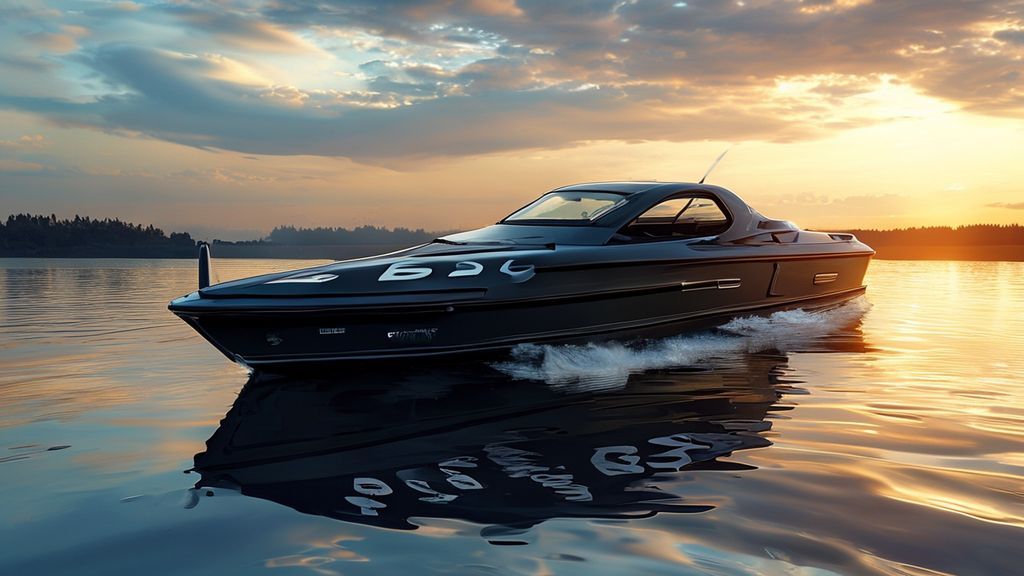
Your PCL number must be displayed: * **On both sides of the bow:** That's the front part of your boat. * **Above the waterline:** It needs to be clearly visible when your boat is in the water. * **In a prominent position:** No hiding it behind fenders or anchors! It needs to be easy to spot from a distance.Size and Style Matters
This is where the *Small Vessel Regulations SOR/2010-91* get specific, and for good reason. * **Minimum 75mm (3 inches) high:** Each character of your PCL number must be at least 75 millimetres (or 3 inches) tall. Don't eyeball this; measure it! * **Block letters:** The regulations specify "block characters." This means no fancy script, no italics, no thin lines. Think bold, easy-to-read letters and numbers. This ensures readability, even at speed or from a distance. * **Contrasting colour:** Your PCL numbers must be in a colour that sharply contrasts with the background colour of your boat. If your boat is light-coloured, use dark numbers (black, dark blue). If your boat is dark, use light numbers (white, silver). The goal is maximum visibility.Why So Specific?
Imagine a search and rescue scenario. The Coast Guard is looking for a specific boat. They need to be able to identify it quickly and accurately, often from a helicopter or another fast-moving vessel. Faded, small, or fancy-scripted numbers just won't cut it. They waste precious time. Beyond emergencies, clear PCL numbers are essential for law enforcement. If there's an incident on the water, or if they need to identify a vessel for any reason, those numbers are their primary tool. Having compliant, visible numbers shows you're a responsible boater who takes safety and regulations seriously. It's a small detail that speaks volumes.Renewing Your PCL: Don't Let It Lapse!
Your Pleasure Craft Licence is valid for 10 years. That might seem like a long time, but believe me, those years fly by! It's easy to forget about it until you're suddenly due for renewal. Transport Canada usually sends out a reminder, but it's a good idea to mark the expiry date on your calendar. Renewing is similar to the initial application process. You'll go back to the Transport Canada online portal, select the renewal option, confirm your details, and re-upload any necessary documents (like a current photo of the boat if its appearance has changed). It's also important to update your PCL information if anything changes, such as your address or if you sell the boat. If you sell your boat, you *must* transfer the PCL to the new owner within 90 days. The new owner then has 90 days to complete the transfer with Transport Canada. This ensures that the correct owner information is always on file, which, again, is critical for identification and emergency purposes.The Bigger Picture: Safety and Compliance
Getting your PCL and displaying it correctly is a fundamental part of being a responsible boater in Ontario. It's not just about avoiding fines; it's about contributing to a safer boating environment for everyone. Think about it: if every boat on the water is easily identifiable, it makes it easier for emergency services to respond, for law enforcement to maintain order, and for you to be found if you ever need help. According to the Lifesaving Society, a significant number of boating fatalities involve unidentifiable vessels, making search and rescue efforts much harder. Having your PCL clearly displayed is a small step that can make a huge difference in an emergency. This PCL is just one piece of the puzzle. Make sure you've also got your Pleasure Craft Operator Card (PCOC) – that's your "boating licence" in the traditional sense, proving you know the rules of the road. And, of course, always have all your required safety equipment on board, from lifejackets for everyone to a sound-signalling device and a bailer. You can find more detailed guides on these topics right here on ontarioboatramps.ca.Frequently Asked Questions (FAQ)
Q1: Is a PCL the same as a boat licence?
No, not exactly. A Pleasure Craft Licence (PCL) is an identification number for your boat, similar to a vehicle registration. A Pleasure Craft Operator Card (PCOC) is what most people refer to as a "boat licence" – it's proof that you've passed a competency exam and know how to operate a boat safely. You need both for most powerboats in Ontario.
Q2: What if I buy a used boat with an existing PCL?
If you buy a used boat that already has a PCL, you must transfer the licence into your name within 90 days of purchase. The previous owner is also required to notify Transport Canada of the transfer within 90 days. You'll need a bill of sale and the previous PCL document to complete the transfer online.
Q3: Can I get a temporary PCL?
Yes, Transport Canada offers a temporary PCL. If you've submitted your application but haven't received your official document yet, you can print a temporary PCL from their website. This allows you to legally operate your boat while you wait for the permanent one, provided your application has been successfully submitted.
Q4: What happens if my PCL numbers fade or get damaged?
It's your responsibility to ensure your PCL numbers remain clear, legible, and compliant with the regulations at all times. If they fade, peel, or get damaged, you need to replace them immediately. Operating with unreadable numbers is the same as not having them displayed at all and can result in fines under the *Small Vessel Regulations SOR/2010-91*.