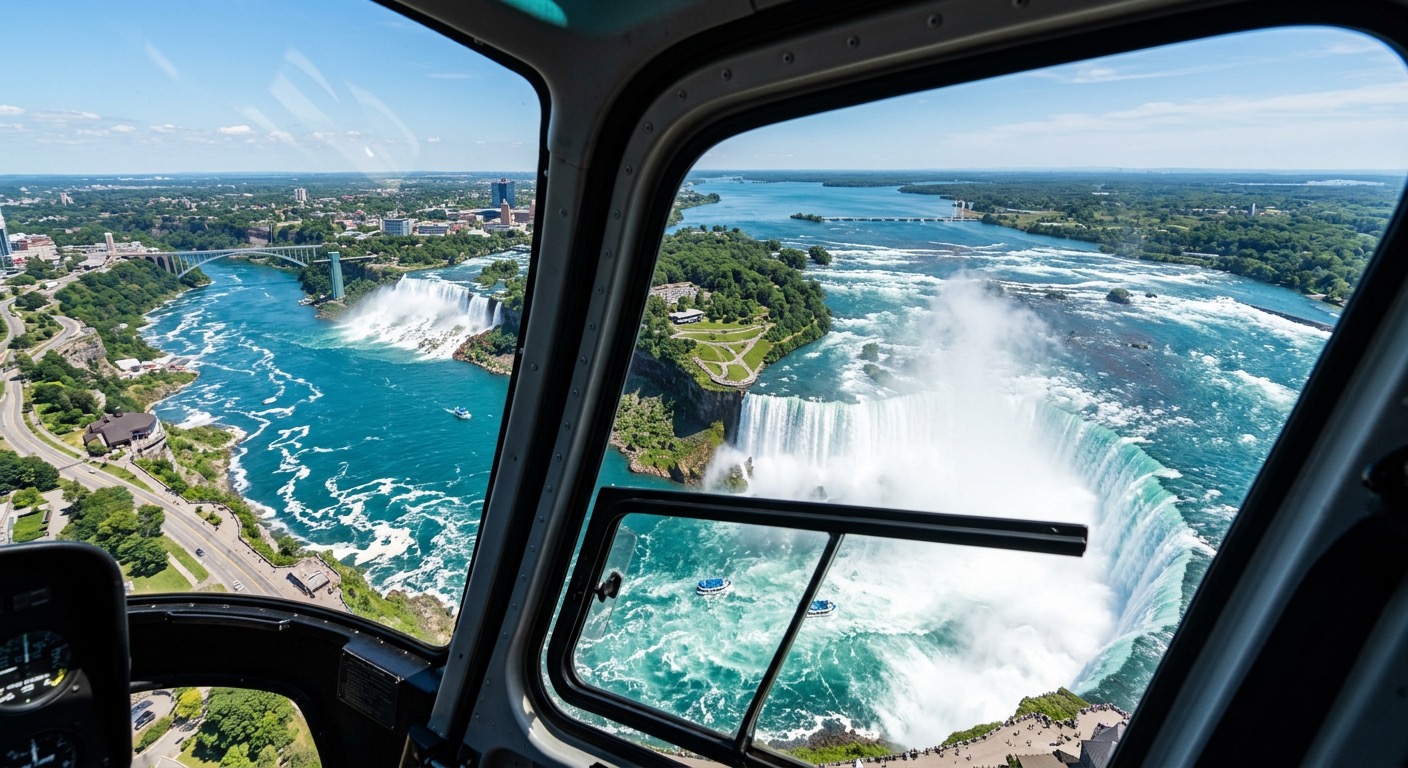
Your First Time on Open Water — What Nobody Tells You
Hey there, fellow boater! TJ here, from Port Colborne, right on the edge of Lake Erie. I’ve spent more hours than I can count out on the water, from the big lakes to the smaller rivers, and let me tell ya, I’ve seen a lot. I’ve also made my fair share of mistakes, especially when I first started venturing out beyond the sheltered harbours. That’s why I want to chat with you today, friend to friend, about something really important: your first time on open water. You see, there’s a world of difference between puttering around a calm, inland lake and heading out onto the vast, unpredictable expanse of the Great Lakes. Nobody really tells you *everything* you need to know until you’re out there, feeling it for yourself. And sometimes, that’s a lesson learned the hard way. I don’t want that for you or your family. My goal here is to give you the straight goods, the stuff I wish someone had told me before I took my own family out for the first time. It’s about being prepared, being smart, and most importantly, being safe.The Great Lakes: A Different Beast Entirely
When you’re used to smaller lakes or rivers, the Great Lakes can feel like an ocean. And in many ways, they act like one. They’re massive, deep, and can generate their own weather patterns. The sheer scale means that a gentle breeze on shore can be a roaring gale a few kilometres out. The waves can build up over long fetches, becoming powerful forces that can easily overwhelm an unprepared boater. I remember my first time taking my little runabout out past the breakwall on Lake Erie. I’d spent years on smaller lakes, feeling like a seasoned pro. I thought, "How different can it be?" Oh, buddy, was I in for a surprise. The water looked calm enough from the marina, but once I cleared the protection of the harbour, it was like a whole new world.Waves: Not What You See on TV, Eh?
You see waves on TV, in movies, or from the shore, and you think you know what they’re like. You imagine a gentle rocking, maybe a bit of spray. But let me tell you, being *in* those waves is a completely different experience.The Unexpected Feel of Waves
On open water, especially the Great Lakes, waves aren't just up and down. They come from different directions, they stack up, they reflect off shorelines, and they can be incredibly unpredictable. You’ll feel your boat doing things you never expected: pitching forward and back, rolling side to side, and even yawing (swinging its bow left and right). I recall one trip where the forecast was for light chop. Sounded fine, right? But once we were out there, the wind picked up, and the waves started to get steep and close together. My boat, which felt so stable on the river, was getting tossed around like a toy. My kids, who usually loved boating, started looking green. It wasn't just the height of the waves, it was the *motion*. The constant, unpredictable jolt and sway can be disorienting and uncomfortable. It can also make simple tasks, like checking your charts or even just holding a drink, incredibly difficult.Dealing with Waves
So, what do you do? First, don't fight them. Trying to power through big waves head-on can be dangerous, causing your bow to slam down hard, potentially damaging your boat or injuring passengers. It’s also incredibly uncomfortable. Instead, learn to work with the waves. You might need to adjust your speed, trim your engine up or down, and change your angle of approach. Often, taking waves at a slight angle (say, 15-30 degrees off the bow) can give you a smoother ride than going straight into them or taking them directly on the beam. If the waves are really big, you might need to slow down significantly, just enough to maintain steerage, and let the boat ride over them. Sometimes, the best thing to do is turn around and head back to calmer waters. More on that in a bit.Wind: Your Unseen Co-Pilot (or Saboteur)
Wind is another factor that behaves very differently on open water. On a small lake, a bit of wind might just create some ripples. On the Great Lakes, wind can whip up significant waves, push your boat around, and make steering a real challenge. At higher speeds, your boat has enough momentum that the wind might not feel like a huge factor. But try to dock in a crosswind, or manoeuvre slowly in a tight spot, and you’ll quickly realize the power of the wind. It can push your bow or stern around, making your boat feel like it has a mind of its own. I remember trying to pull up to a fuel dock on a slightly breezy day. I thought I had it all figured out, but as I slowed down, the wind just grabbed the bow of my boat and pushed it right past the dock. I had to circle around three times, looking like a complete rookie, before I finally got it right. It was humbling, to say the least. Always account for the wind, especially when you’re trying to hold a course or come alongside something.Reading the Water: Your Crystal Ball
This is a skill that comes with practice, but it’s vital on open water. The surface of the water can tell you a lot about what’s happening beneath and what’s coming your way. Look for changes in the water’s surface. Ripples usually mean light wind. Whitecaps mean stronger winds and bigger waves. A sudden patch of glassy water next to choppy water could indicate a current or a wind shadow. Look for "wind lines" – streaks on the water that show the direction and strength of the wind. Also, pay attention to the colour of the water. Darker patches might indicate deeper water or a different bottom composition. Lighter patches could mean shallower water or sandbars. On the Great Lakes, you might even see different colours of water where currents from rivers meet the lake, or where sediment is being stirred up. Always be looking ahead, not just at your bow, but kilometres out. The conditions you see far away are what you’ll be dealing with soon enough.Great Lakes Weather: Blink and You Miss It
This is perhaps the most critical lesson I learned the hard way. The weather on the Great Lakes can change with astonishing speed. A beautiful, sunny morning can turn into a raging storm in an hour or less. Squalls can pop up seemingly out of nowhere, bringing high winds, heavy rain, and dangerous waves. Fog can roll in so thick you can’t see your hand in front of your face. I once left Port Colborne on a gorgeous summer day, heading towards Port Maitland. The forecast was clear. Halfway there, the sky turned dark, the wind picked up from nowhere, and the waves started building fast. We were caught in a squall, and it was terrifying. My family was scared, and I was scrambling to get us back to safety. We made it, but it was a close call, and it taught me a profound lesson. Always, and I mean *always*, check the marine forecast before you leave the dock. And don't just check it once; check it again just before you go, and keep an eye on the sky and your weather radio (or marine VHF with weather channels) while you're out there. Conditions can change so rapidly that you need to be constantly aware. The Lifesaving Society consistently highlights that sudden weather changes and cold water immersion are major factors in boating incidents. Even in summer, Great Lakes water can be dangerously cold, leading to hypothermia if you end up in the water.When to Turn Back: No Shame in Smart Boating
This is probably the most important piece of advice I can give you, and it’s one I’ve had to learn to embrace myself. There is absolutely *no shame* in turning back. None. Zero. Your ego is not worth your family’s safety. If the conditions start to deteriorate, if you or your passengers are uncomfortable, if your gut tells you something isn't right – turn around. Seriously. It’s better to be back at the dock, maybe a little disappointed you didn’t make it to your destination, than to be out there in conditions you can’t handle, putting everyone at risk. I’ve turned back countless times. Sometimes it’s because the waves got too big for my boat. Sometimes it’s because a storm was brewing faster than expected. Sometimes it’s just because my kids weren’t having fun anymore. Every time, I’ve been glad I made the call. A smart boater knows their limits and their boat’s limits. Don't push it. Always have a solid pre-departure checklist, and make "go/no-go" decisions based on safety, not ambition.Hug the Shore, Buddy, At Least for Now
For your first few trips on open water, especially on the Great Lakes, stay close to shore. Like, within sight of land close. This gives you a safety net. If something goes wrong – engine trouble, sudden weather, someone gets seasick – you’re not far from help or a safe harbour. It allows you to get a feel for how your boat handles in different conditions without the added stress of being miles from anywhere. You can gradually venture further out as your confidence and experience grow. Think of it as training wheels for open water. You wouldn't learn to drive a car by immediately hitting the highway, right? Same principle applies here.Know Your Boat's Limits (and Your Own!)
Every boat has a design envelope. It’s built for certain conditions, certain loads, and certain speeds. A small bowrider is not designed to handle the same conditions as a large cruiser or a dedicated offshore fishing boat. Understand what your boat can realistically handle. Don’t push it beyond its capabilities. Overloading your boat or taking it into conditions it wasn’t designed for is a recipe for disaster. This also extends to your own limits. Are you experienced enough to navigate in fog? Can you handle docking in strong winds? Do you know how to respond to an engine failure far from shore? If the answer is no, then you need more training or more experience before tackling those situations. Make sure you have your Pleasure Craft Operator Card (PCOC) and that you understand the rules of the road. And speaking of rules, remember that all vessels operating in Canadian waters must comply with the Small Vessel Regulations SOR/2010-91, which means carrying specific safety equipment like lifejackets, flares, a sound-signalling device, and more. Make sure your boat is properly registered and that your registration decals are clearly displayed. If you need new ones, check out compliancelettering.ca – they do a great job. Also, never, ever operate your boat under the influence of alcohol or drugs. It’s not just dangerous, it’s illegal under the Criminal Code s.320.14, and the penalties are severe. Keep your wits about you.Lakes vs. Rivers: Not All Water is Created Equal
While both are bodies of water, boating on a large lake is fundamentally different from boating on a river.Lakes
On large lakes, especially the Great Lakes, the primary forces you’re dealing with are wind and waves. Currents are generally less significant, except in specific areas like narrows, river mouths, or connecting channels. Navigation is often about avoiding shoals, dealing with open water conditions, and being prepared for rapidly changing weather. You have vast expanses of water, and distances can be deceiving.Rivers
Rivers, on the other hand, are dominated by current. You need to understand how the current affects your boat, especially when docking, anchoring, or navigating narrow channels. You’ll encounter different hazards like snags, eddies, and rapids. Navigation often involves following specific channels, understanding buoyage systems that account for current, and being aware of commercial traffic. The challenges are different, but equally demanding. My experience on the Welland Canal, for example, taught me a lot about currents and how they can push a boat around, even a big one. It’s a completely different mindset than being out on Lake Erie.Final Thoughts from TJ
Boating on open water, especially the Great Lakes, is an incredible experience. There’s nothing quite like the feeling of freedom and adventure you get out there. But that freedom comes with a big responsibility. Be prepared, be humble, and always put safety first. Learn from every trip, and don't be afraid to ask for advice from more experienced boaters. We've all been beginners, and we all want to see you and your family enjoy the water safely. Keep learning, keep practicing, and always respect the power of the water. And hey, maybe I’ll see you out on Lake Erie sometime!Frequently Asked Questions (FAQ)
What's the single most important thing for a beginner boater venturing onto open water?
Hands down, it's knowing when to turn back. Your ego has no place on the water when safety is at stake. If conditions are getting rough, if you or your passengers are uncomfortable, or if your gut tells you it's not right, turn around. There's no shame in making a safe decision.
How often should I check the weather when I'm out on the Great Lakes?
You should check the marine forecast before you leave the dock, and then continuously monitor it while you're out. Conditions on the Great Lakes can change incredibly quickly. Use a marine VHF radio with weather channels or a dedicated weather radio. Keep an eye on the sky and the water around you for any signs of change.
What should I do if I get caught in unexpected bad weather on open water?
First, don't panic. Slow down to a safe speed that allows you to maintain steerage without slamming into waves. Trim your engine to help the bow ride over waves. If possible, head for the nearest safe harbour or sheltered area. If you can't, try to take waves at a slight angle (15-30 degrees off the bow) to minimize pounding. Ensure everyone on board is wearing a lifejacket, and secure loose items. If you have a marine VHF radio, you can call for assistance if needed.
Do I really need all the safety gear listed in the Small Vessel Regulations?
Absolutely, yes! The safety gear required by the Small Vessel Regulations SOR/2010-91 isn't just a suggestion; it's there to save lives. Things like lifejackets for everyone on board, a sound-signalling device, a bailer or pump, and flares are crucial. Having them on board and knowing how to use them can make all the difference in an emergency. Don't skimp on safety – it's not worth the risk.